2026-08-11 · Thomas Reed
How To Flush Sediment From A Water Heater Tank
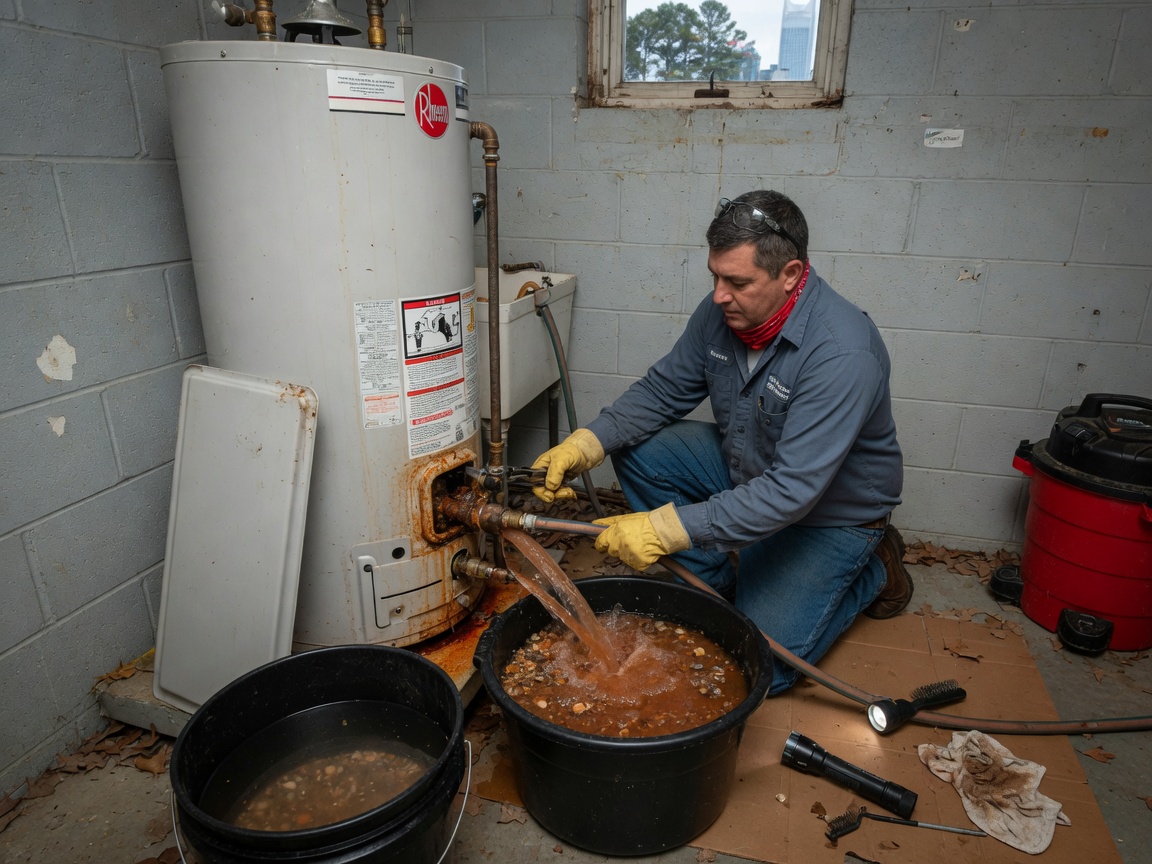
Flushing sediment from a water heater tank takes 45-90 minutes and requires shutting off power or gas, attaching a hose, and running multiple drain cycles until the water runs clear. In Charlotte's humid subtropical climate with hot summers and mild winters, mineral deposits from hard water accelerate buildup, reducing efficiency and shortening the typical 8-12 year lifespan of a 40- or 50-gallon unit. Regular flushing prevents overheating and noisy operation common in Mecklenburg County homes.
Why Sediment Accumulates in Local Tanks
Charlotte water contains dissolved minerals that settle at the bottom of tanks over time, especially during periods of higher usage in hot summers. This layer insulates the heating element, forcing the unit to work harder and raising energy costs. Homes in neighborhoods like Dilworth and Myers Park often see faster accumulation due to older plumbing lines. Mild winters mean less temperature fluctuation, but the consistent humidity still promotes corrosion inside steel tanks. Flushing every 6-12 months helps maintain performance without needing immediate water heater repair Charlotte NC.
Tools and Safety Steps Before Starting
Gather a garden hose, flathead screwdriver, gloves, and a bucket before beginning. Turn off the power at the breaker for electric models or set the gas valve to pilot on gas units. Close the cold water supply valve at the top of the tank. Allow the water inside to cool for at least two hours to avoid burns. Place the hose on the drain valve near the bottom and run it to a safe outdoor area or floor drain. These precautions protect both the homeowner and the equipment during the process.
Step-by-Step Flushing Process
Open a hot water faucet in the house to relieve pressure, then open the drain valve slowly to start emptying the tank. Once flow slows, close the valve and turn the cold supply back on for 30 seconds to stir up sediment. Repeat the drain and refill cycle three to five times until water exits clear. For stubborn buildup, use a short burst from the cold inlet while the drain remains open. Finish by closing the drain, refilling the tank fully, and restoring power or gas. Check for leaks at all connections afterward.
Signs It Is Time to Flush or Seek Help
Rumbling noises, lukewarm water at fixtures, or visible rust in the hot water stream indicate sediment has reached problematic levels. In areas like South End and NoDa, where many homes have 50-gallon tanks installed 10+ years ago, these symptoms appear more frequently. If draining produces only a trickle or the tank shows external corrosion, stop and contact a professional. Persistent issues after flushing often point to failing anode rods or heating elements that require gas water heater repair.
How Often Charlotte Homeowners Should Flush
Perform a full flush twice a year in Mecklenburg County, ideally before peak summer demand and again after mild winter months. Homes near Freedom Park or the Bechtler Museum area with higher water hardness may benefit from quarterly checks. Track the clarity of drained water each time to adjust the schedule. Consistent maintenance extends tank life and delays the need for water heater installation in older properties around Uptown Charlotte and Ballantyne.